

Our programmes
Our approach
We provide access to centralised expertise and operational support to accelerate exceptional academic science into attractive biotech assets.
Our deep and broad expertise ensures that we can identify and develop promising therapeutic candidates efficiently, giving them the attention they deserve. For us, the right molecule, brought into Slingshot at the right time, means groundbreaking treatments, delivered earlier.
When looking for ideas; we seek:
-
 World-leading scientists
 -
 Targeted disease understanding
 -
 Clear development pathways
 -
 Significant unmet medical need

Building a diverse pipeline of
high-potential programmes

We are always on the lookout for leading programmes that align with our mission to advance scientific discovery, fast-track clinical progress and accelerate access to groundbreaking therapies for patients. If your asset fits this profile, then it could be the next one to join and grow the Slingshot portfolio.
Richard Wooster CSO
Our assets
ALTx Therapeutics
SSTX—002 | SSTX—003
Multiple small molecule therapeutics for the treatment of cancers that make use of the Alternative Lengthening of Telomeres (ALT) pathway.

Executive summary
- Indication: Targeted oncology for cancers dependent on the Alternative Lengthening of Telomeres (ALT) pathway
- Target: Multiple novel targets
- Founding scientist: Dr. Simon J. Boulton, Francis Crick Institute
Programme overview
10-15% of all cancers rely on the ALT pathway to elongate their telomeres, as a mechanism to escape telomere crisis and promote tumour growth. Reliance on ALT introduces unique vulnerabilities in these cancers that can be exploited to specifically kill these tumour cells.
Dr. Simon J. Boulton’s work at the Francis Crick Institute has systematically explored, identified and characterized these vulnerabilities and ALTx stems from these insights. ALTx is developing first in class therapeutics against novel targets to exploit the most promising of these vulnerabilities. The company operates through a deep hands-on collaboration with the Francis Crick Institute.
Founding team

Dr. Simon J. Boulton
Founder
Simon is a Principal Group Leader & Assistant Research Director for Translation at the Francis Crick Institute in London and Chief Translation Advisor for Cancer Research UK with over 30 years’ experience studying mechanisms of DNA repair and telomere maintenance. Over the years Simon’s lab has discovered new DNA repair/telomere genes and provided novel insights into human diseases including cancer. In 2016, Simon helped to establish Artios Pharma Ltd where he functioned as VP of Science Strategy alongside his academic roles at the Francis Crick Institute and Cancer Research UK.
LinkedIn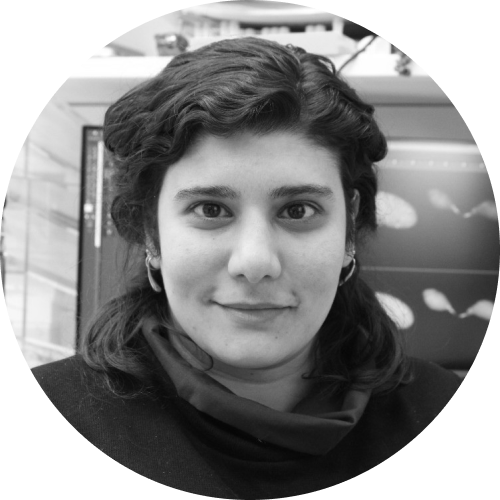
Benura Azeroglu
Biology Lead
Benura obtained her PhD in Cell and Molecular Biology at the University of Edinburgh under the supervision of Professor David Leach. She completed her postdoctoral training at the National Cancer Institute (NIH) in the laboratory of Dr Eros Lazzerini Denchi, where she investigated the regulation of alternative lengthening of telomeres (ALT) and identified potential therapeutic vulnerabilities in ALT-dependent cancers. In 2025, she joined the Francis Crick Institute, supporting Simon Boulton’s translational research efforts focused on targeting ALT in cancer.
LinkedIn
Pete Craggs
Pharmacology & Screening Lead
Pete joined the Chemical Biology STP of the Francis Crick Institute in 2024, following a four year industry-academia fellowship carried out at the Crick. Prior to this Pete worked in early stage drug discovery at GSK for over 20 years, contributing to and leading projects in a range of therapy areas, including immuno-inflammation, infection and oncology. Pete carried out his PhD in biochemistry and enzymology with Professor Luiz Sorio Carvalho at the MRC National Institute of Medicinal Research.
LinkedIn
Rob Quinlan
Chemistry Lead
Rob carried out a DPhil in chemistry under the supervision of Professor Paul Brennan at the University of Oxford, working on the development of small molecule treatments for neurodegenerative diseases. He completed a brief postdoc with Professor Brennan at the ARUK Oxford Drug Discovery Institute before joining the Chemical Biology STP of the Francis Crick Institute in 2023 as a senior medicinal chemist.
LinkedIn
Stephane Mouilleron
Structural Biology Lead
Stéphane obtained his PhD in Biochemistry and Crystallography at the CNRS, University of Paris-Saclay, where he studied the enzymatic mechanism of Glucosamine-6-Phosphate Synthase. He completed his postdoctoral training at the CRUK-London Research Institute in the laboratory of Dr. Neil McDonald, focusing on the structural analysis of actin-binding proteins. Following a role as Head of the Protein Structure Unit at CRUK, London, he joined the Francis Crick Institute’s Structural Biology Science Technology Platform to support the institute’s drug discovery projects.
LinkedInApini
SSTX—001
Novel small molecule therapeutics for the treatment of inflammatory diseases without induction of immune suppression.

Executive summary
- Target: eNAMPT
- Indication: Inflammatory diseases
- Stage: Hit to lead
- Founding scientist: Professor Sam Butterworth, University of Manchester
Programme overview
There remains unmet need in chronic inflammatory diseases. Our mission is to maximise the potential of targeting extracellular nicotinamide phosphoribosyl transferase (eNAMPT) as a novel treatment for chronic inflammation. Apini stems from work of Professor Sam Butterworth, University of Manchester, in collaboration with Professor Paul Caton, King’s College London, and exploits proprietary small molecules that modulate eNAMPT.
Target potential
Inhibiting eNAMPT has potential to treat inflammatory diseases without induction of immune suppression. Preclinical studies have demonstrated the potential for selective eNAMPT inhibitors to be applied across multiple chronic inflammatory diseases.
Scientific founder

Professor Sam Butterworth
Founder
Sam has 20 years’ experience in drug discovery and medicinal chemistry projects, including leading compound design and IP strategy, predominantly focusing on oncology, inflammatory and metabolic diseases.
Prior to his current academic career, Sam spent eight years with AstraZeneca where he invented the targeted anti-cancer agent AZD9291, which is now AstraZeneca’s bestselling drug osimertinib/Tagrisso.
LinkedIn